
Traffic is borrowed. Audience is owned.
Traffic is borrowed. Audience is owned.
Why the metric the industry has been optimizing for two decades is the wrong one, and what changes when you start measuring the other.
Most publishers don't have an audience. They have traffic.
And the difference is about to decide who survives.
There's a quiet shift happening in the publishing industry that I don't think gets discussed enough.
For about twenty years, the entire stack of tools, platforms, and incentives around publishing has been built around one core idea: more reach is better. More impressions, more sessions, more unique visitors, more shares. Every platform you publish on rewards reach, every analytics tool you run on your site highlights reach, and every ad network you sell against pays you based on reach. The whole game became reach, and it worked for a long time, until the ground underneath it started moving.
Social platforms changed their algorithms and gutted referral traffic, Google rolled out AI Overviews and started answering questions without sending users to the source. In addition, audiences fragmented across more channels, and the cost of acquiring attention kept rising while the price of selling it kept falling. In the middle of all this, a small group of publishers turned out to be relatively unaffected: their traffic moved less, their revenue stayed stable, and their advertisers kept paying. Looking at what those publishers had in common, the answer is the same in every case: they stopped optimizing for reach a long time ago and started optimizing for something different.
They stopped chasing traffic and started building an audience.
> Traffic is people who arrived. Audience is people who came back on purpose. The first is borrowed from a platform, the second is yours.
Reach and return are two different metrics, and the whole industry built around the wrong one.

On the surface, reach and return look like they measure the same thing: people showed up and read content, some stayed longer, and some came back. It feels like a continuum where bigger is better in either direction. Operationally, they're completely different metrics, and they reward completely different work.
Reach measures how many new people you can put in front of your content in a given period, and the work that drives reach is publishing volume, search optimization, social distribution, and platform partnerships. The strategy is to be visible to as many people as possible, knowing most of them will only show up once. Return measures something else: how many of the people who already know you come back without being prompted. The work behind return is voice, consistency, identity, and editorial trust, and the strategy is to be relevant to a specific group of people, knowing those same people will show up over and over because they want to.
Both numbers can grow at the same time, but they don't naturally pull in the same direction. A publisher chasing reach will produce content that works for first-time visitors and feels generic to existing readers, while a publisher chasing return will produce content that resonates with the people who already know them and looks niche to outsiders. The strategic decisions diverge quickly once you choose, and the harder truth is that most publishers haven't actually chosen. They'll say they care about the audience, but their metrics, their KPIs, and the way their team is structured all reward reach.
Part of why that happens is that the entire tech stack is built to optimize the wrong number. Google Analytics highlights sessions, users, and pageviews, while metrics like recurrence and return frequency are buried two clicks deep. Ad tech is worse because programmatic networks pay on impressions, and direct sales teams pitch CPM rates. So the math of revenue per visitor pushes you to maximize visitors with no built-in reward for the reader who comes back fifteen times a month over the one who showed up once. Distribution platforms reinforce the same logic: social algorithms feed you metrics on reach and engagement inside the platform itself, not on whether the people who saw your post came back to your site later on their own.
The result is that even publishers who intellectually want to build audience end up building traffic by default, because that's what the dashboards are showing them and that's what the incentives are pushing them toward. It's hard to fight a system that's measuring you against the wrong number, and that gap between stated strategy and actual incentives is where the trouble starts.
If your dashboard shows you reach by default, you'll optimize for reach by accident.
What the publishers building audience actually do differently.
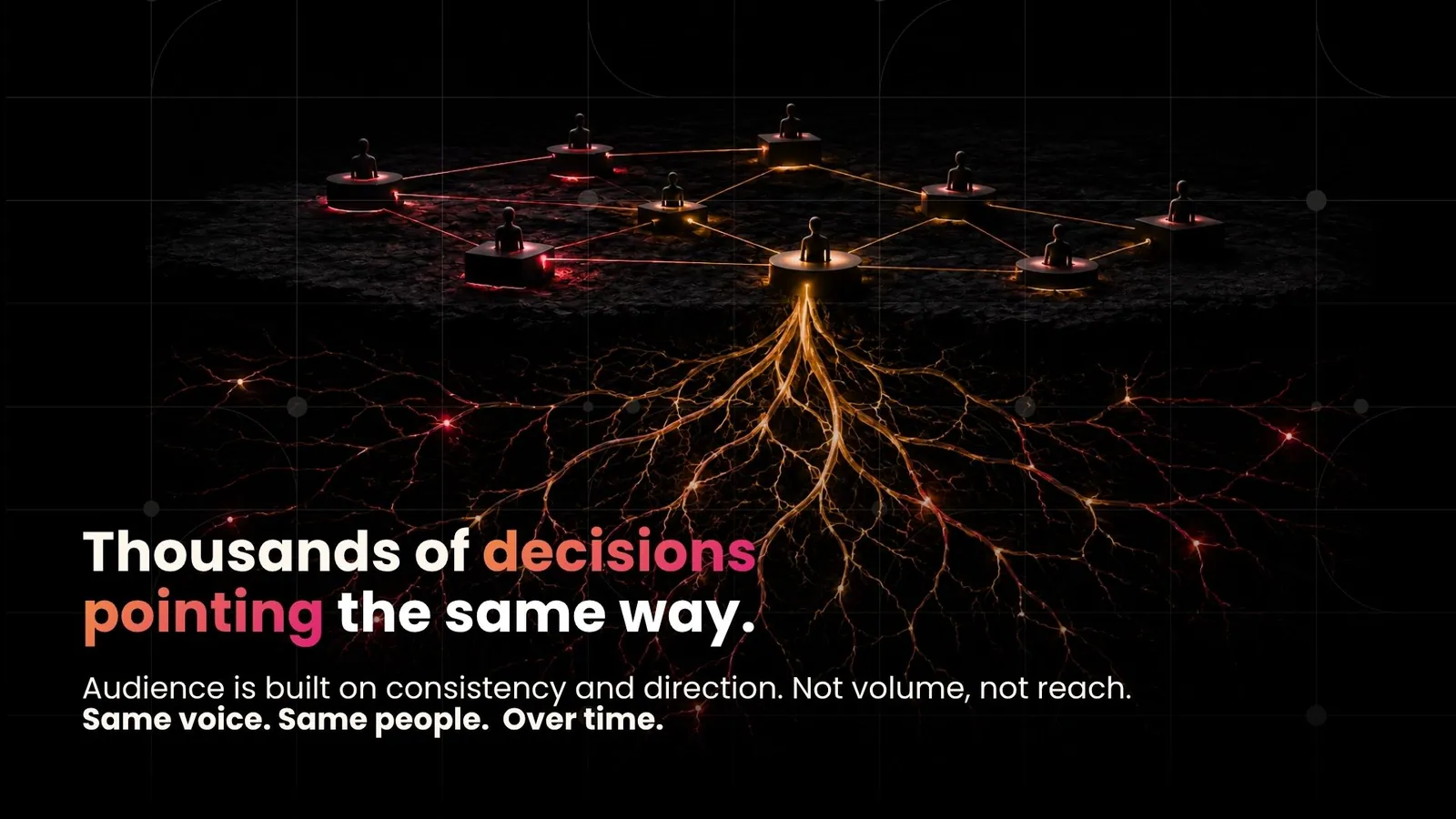
Audience is built on consistency and direction. Not volume, not reach. Same voice. Same people. Over time.
We work with a publisher in the United States that does this kind of work as well as anyone I've seen. I won't name them, but it's worth describing what they do because it makes the abstract idea of audience-building feel concrete.
They don't try to be everything to everyone. Their editorial point of view has stayed consistent for years, even as the industry around them shifted, which means their readers know exactly what they're getting when they show up: a recognizable voice, defended opinions, specific angles. Generic content doesn't appear on the site, even when it would obviously perform on search.
They invest in their comments section the way most publishers invest in social media. The community of regular readers talks to each other on the site, references each other across articles, and treats the publication as a meeting place for people who care about the same things. This is rare in the modern web because most publishers turned their comments off years ago, treating engagement as a moderation cost instead of an audience asset.
They also publish at a cadence that creates habit, so the audience knows when to expect new pieces and what kinds of pieces to expect, and the publishing rhythm becomes part of the product rather than a logistical concern. Most importantly, they make editorial decisions based on what their existing readers will care about, not on what might rank or what might get shared, and when those two goals conflict they pick existing readers every time. Over years, this compounds into something that looks like luck from the outside but is really the result of thousands of small choices that pointed in the same direction.
Why this is more urgent than it has ever been.

If this were a strategy question we could ponder over the next five years, it would be interesting but not urgent. The reason I'm writing this now is that the timing on this shifted dramatically in the last eighteen months.
AI search is changing the economics of reach faster than most publishers are reacting. When Google's AI Overviews answer a question directly in the search results, the user has no reason to click through, which means the publisher that ranked for that query, who spent years building the SEO foundation that earned that ranking, now gets zero traffic from a query that used to be worth thousands of visits per month. On top of that, social referral traffic has been declining for years, and the curve isn't reversing, with Meta explicitly deprioritizing news content, X fragmenting, and TikTok pushing views inside its app while discouraging clickouts. The free distribution channels that built the audiences of most modern publishers are slowly closing.
Inside all of these shifts, the publishers with strong direct audiences (people who type the URL, who subscribe to the newsletter, who come back without being prompted) are protected. The publishers running on borrowed audiences from platforms are exposed. The gap between the two groups is widening every quarter, and there's no sign that the curve is going to reverse on its own.
Audience unlocks business models that traffic never can.
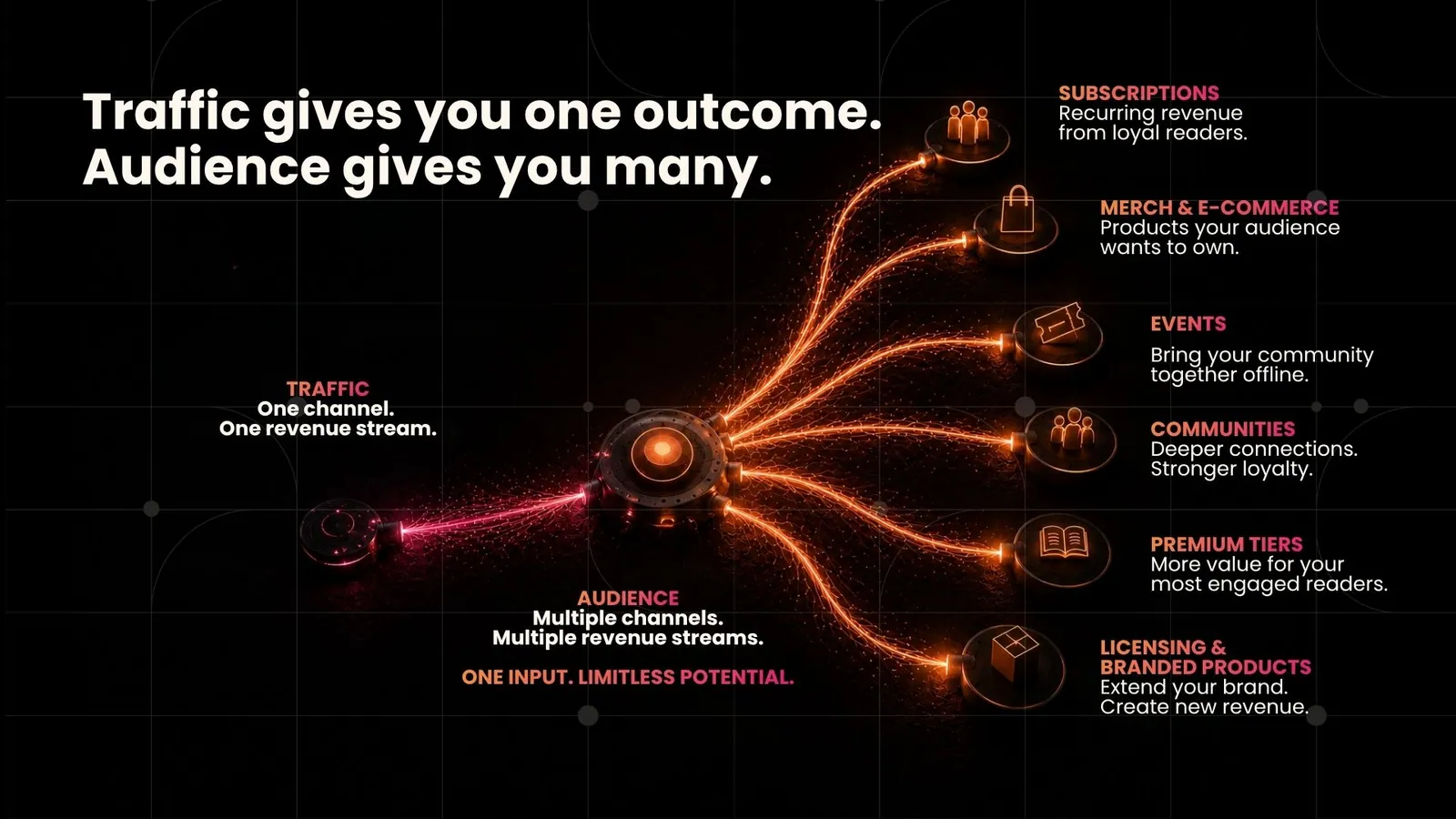
Here's the part that changes how the whole question feels. Even if everything I described above were not happening, even if reach were still cheap, stable, and predictable, audience would still be more valuable than traffic for one reason that publishers rarely articulate: audience opens revenue streams that traffic can't reach.
Events, communities, premium tiers, licensing, and branded products: every alternative revenue model in publishing requires an audience as a precondition. A publisher with traffic but no audience can't launch any of these, because they have visitors, not fans. This is why the conversation about audience and traffic is no longer a tactical one. The publishers with real audiences are diversifying their revenue away from ads, while the publishers with traffic are watching their ad revenue erode with no fallback plan: same content, same effort, completely different financial trajectory.
> Traffic gives you ad revenue. Audience gives you everything else.
The talent problem nobody warns you about.
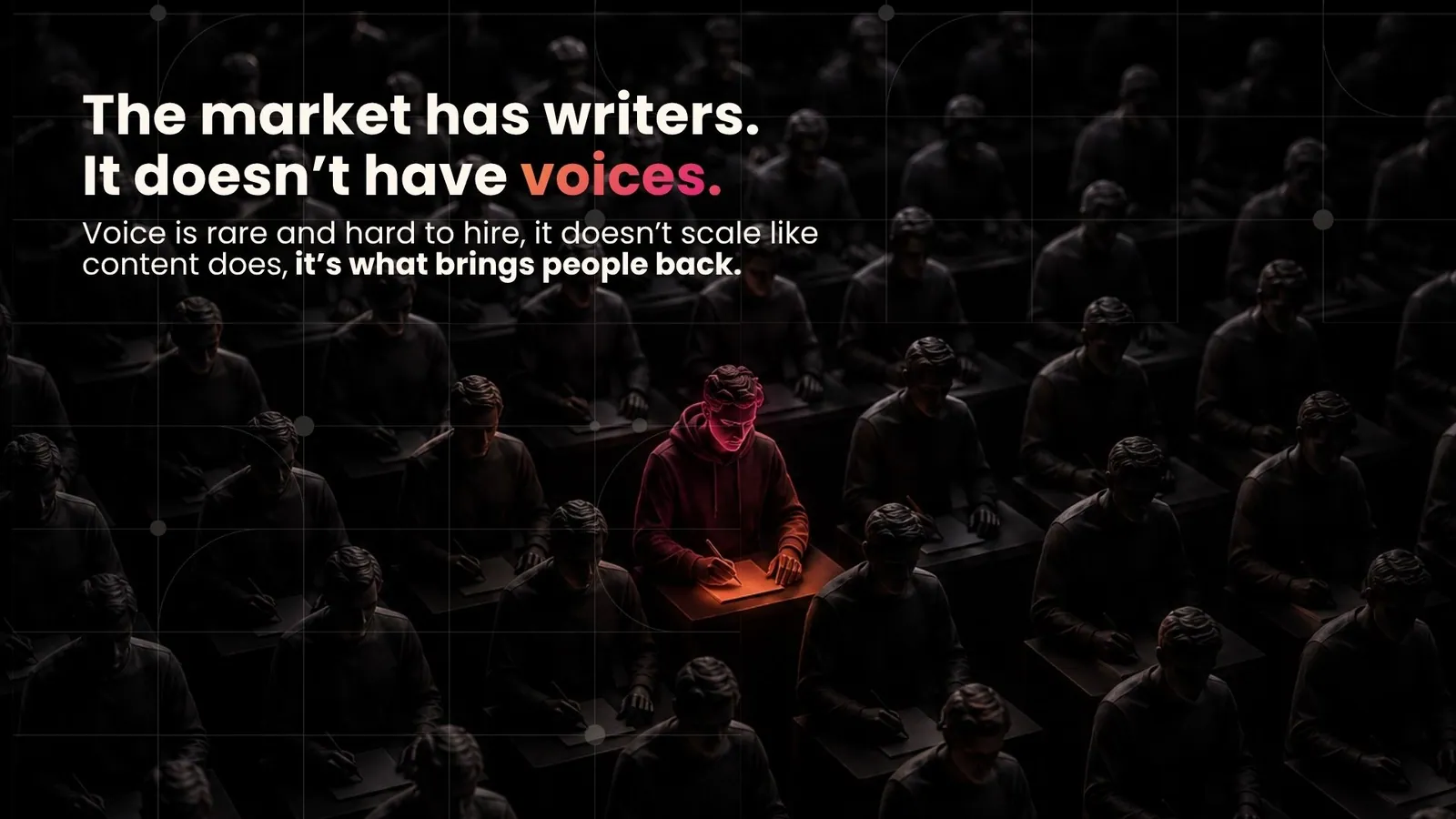
When publishers do decide to make this shift, they usually run into a problem that surprises them: building audience requires a different kind of writer than building traffic, and that kind of writer is much harder to find.
Here's where the operational reality hits. The market is full of writers who can produce excellent third-person content, but the market has very few writers who can sustain a first-person voice that an audience will follow without sounding amateur, self-indulgent, or pretentious. The skillset is rarer, harder to evaluate, and harder to find through standard hiring channels.
Building the editorial team for an audience-driven publisher feels more like casting than recruiting. You're not looking for a writer who can hit a brief, you're looking for a specific voice that fits the publication and that the existing audience will recognize as belonging. Standard recruiting platforms filter for experience, but the thing that matters here doesn't show up on a CV: it shows up in the writing itself, and you have to read a lot of writing to find it.
This is the part most publishers underestimate when they decide to make the shift. The strategy is clear, the case is compelling, and then they realize they need to build a team they don't yet know how to find. We've spent significant effort building that capability internally because it turns out to be one of the harder things to do well in this industry, and it's the bottleneck between knowing the right strategy and actually executing it.
What changes operationally if you take this seriously.
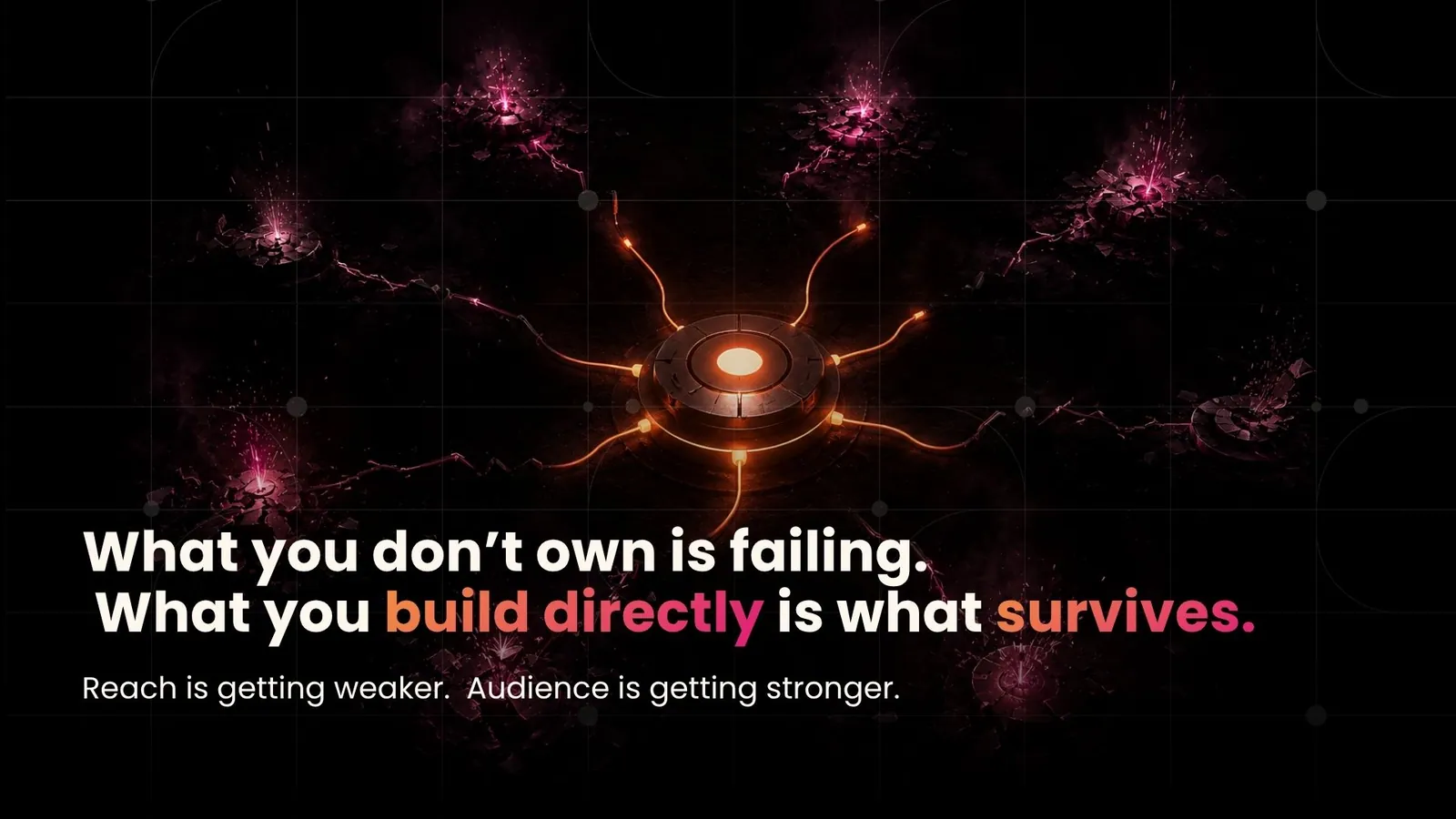
A publisher that decides to build audience instead of traffic has to make a set of choices that look strange from the outside.
The metrics that matter change first. Recurrence and return frequency become more important than monthly uniques, direct traffic and newsletter open rates become more important than referral traffic, and time spent on site becomes more important than pageviews per session. The dashboard has to be rebuilt to highlight different numbers, because the old dashboard is going to keep pushing you toward the wrong decisions.
The content strategy changes next. You produce fewer pieces with more depth, more voice, more specificity, giving up volume in exchange for relevance, knowing that the volume play is the one that's getting harder anyway. You make editorial bets on perspective, not just on topic. The hiring profile changes along with that: you stop hiring writers who can produce correct content quickly and start hiring writers who have a voice your audience will recognize, accepting that the process is slower, the pool is smaller, and the cost per hire is higher, in exchange for a team that produces work the audience actually wants.
And the timeline changes most of all. Audience compounds slowly. The first six months of doing this look worse on most dashboards than just keeping the volume strategy alive, the first year looks marginal, and the second year starts to bend the curve. By the third year, the publishers who did this start looking dramatically more resilient than the ones who didn't. Most publishers don't have the patience or the internal political support to make it through the first eighteen months, which is part of why so few of them actually do.
None of this is a verdict on which model is better.

I want to be clear about something before this article reads as a one-sided argument, because in practice it isn't one. Traffic-driven publishing and audience-driven publishing are two different business models, and both of them work when they're built on purpose. We work with partners on both ends of the spectrum, and we build the operation each one needs based on what their business model actually requires.
The same publisher can run more than one model under the same roof. Many of the operations we work with have one site or vertical optimized for traffic, where speed and volume matter, and another site or vertical optimized for audience, where voice and relationship matter. Each part of the business gets measured against the standard that fits it. The mistake isn't choosing one model over the other, it's pretending you're running one when you're actually running the other, or trying to apply the metrics of one to the operations of the other and wondering why the numbers don't make sense.
What this article is arguing is something more specific: that for publishers who want long-term resilience against algorithm shifts, AI search, and platform dependency, audience is the asset that protects you. It's not that traffic is bad or wrong, it's that traffic on its own is a more exposed position than most publishers realize. The publishers who do best over a five-to-ten-year horizon are usually the ones who have both, with the audience side carrying enough weight to absorb the shocks the traffic side can't.
So here's the question I'd leave any publisher sitting on this article with.
If tomorrow your largest source of traffic disappeared, whether because Google's AI Overviews ate it or because the algorithm shifted or because the platform that sends you visitors decided to send them somewhere else, would your operation survive?
If the answer is no, you don't have an audience. You have a borrowed pipe, and the borrowed pipe is getting narrower for every publisher, every quarter, with no sign that it's going to reverse.
The publishers who started building audience five or ten years ago look prescient now, and the publishers who started two years ago are starting to see the curve bend in their favor. The publishers still optimizing reach because that's what the dashboard shows them will keep optimizing reach until there's no reach left to optimize, and by then it will be too late to start over.
Working through this in your own operation?
It's the kind of problem we build teams to solve.
See how we work