
The worst way for a client or partner to find out is from anyone but you

A few months ago, a client learned that one of our writers was leaving before I told them.
He was good. He was the kind of writer a client knows by name, the one whose voice they point to when they explain why the numbers are working. He gave me his notice on a Tuesday, and I did what I'd done for years. I sat on it, not to hide it, but to solve it. I wanted to walk into that conversation with the replacement lined up and the transition mapped, so the bad news and the fix would land in the same breath.
By the time I was ready, it was too late, the writer had mentioned it to the client in passing. So the version they got wasn't "here's a problem, and here's how we're handling it," it was "your partner knew and stayed quiet." I could hear what it did on the next call. Something I'd spent a year building slid back, and it slid in the time it takes one person to send one message.
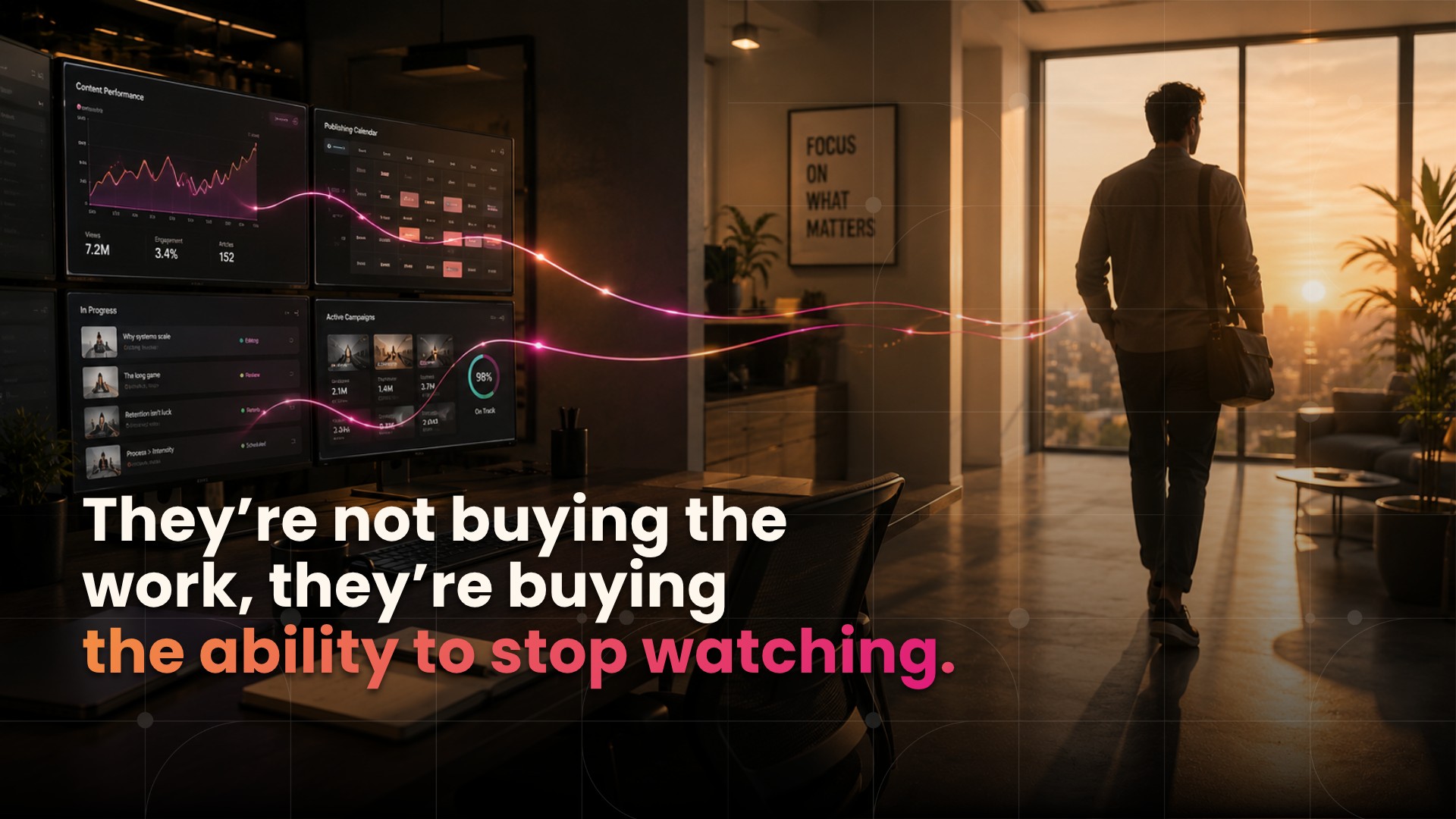
They're not buying the work, they're buying the ability to stop watching.
It didn't take me long to understand why that was expensive, and the reason is specific to how this kind of work gets sold. When a company brings in an outside team to run a function, editorial in this case, they are not really buying articles. They are buying the ability to stop watching. The whole promise of an embedded team is that a piece of their operation can run outside their direct line of sight and still be safe. That feeling of being safe while unwatched or low supervised is the actual product. The deliverables are just the evidence for it.
Which means a problem I hide damages the one thing they are paying for. When a client discovers something I sat on, the lesson they take isn't "there was a simple issue." It's "I can't see what happens over there, and they won't tell me when it breaks in time." That conclusion ends relationships, because it cancels the premise. The reason they hired an outside team was to not have to monitor it as much. The day they feel they have to again, you've turned back into overhead.
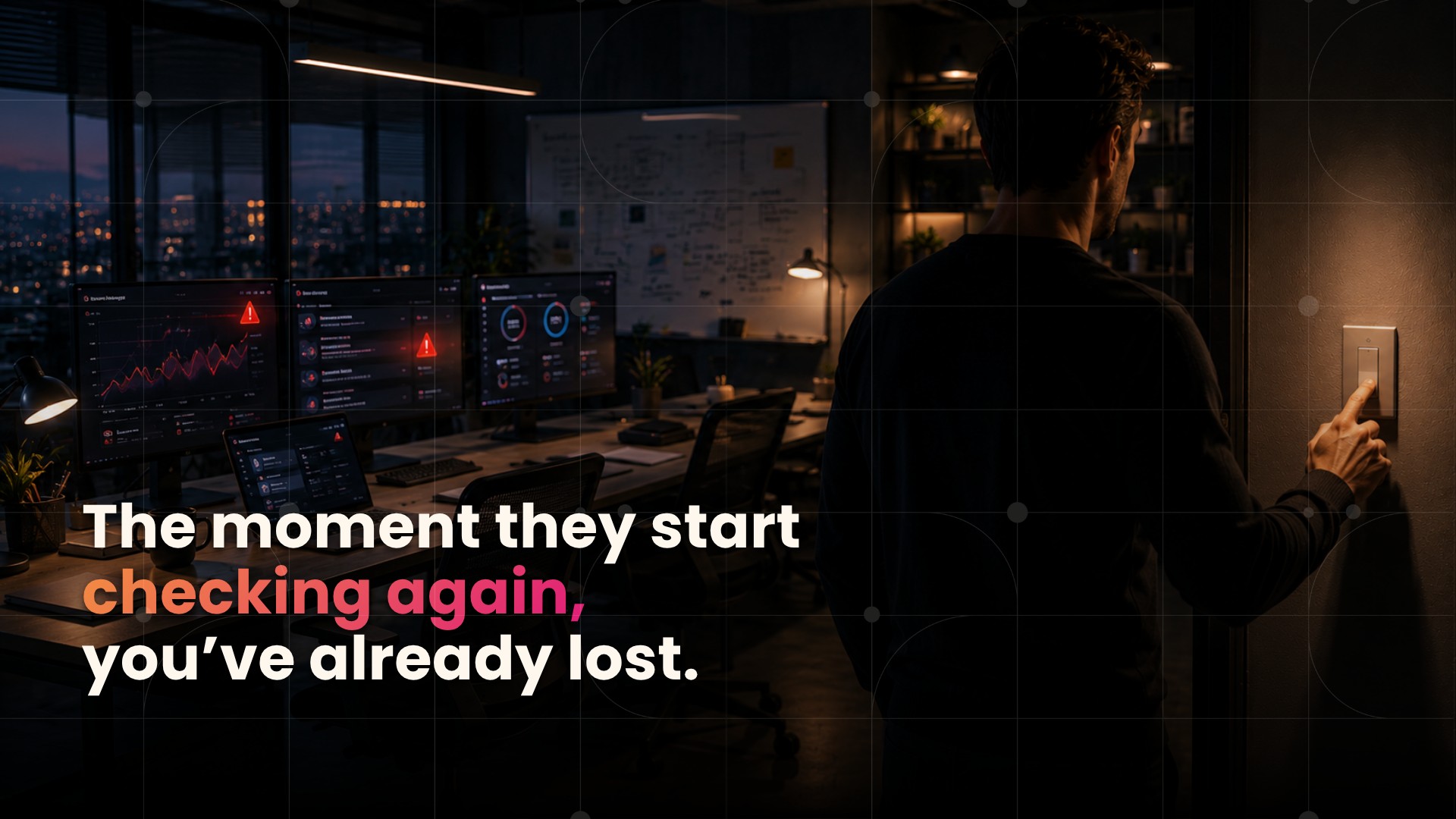
The moment they start checking again, you've already lost.
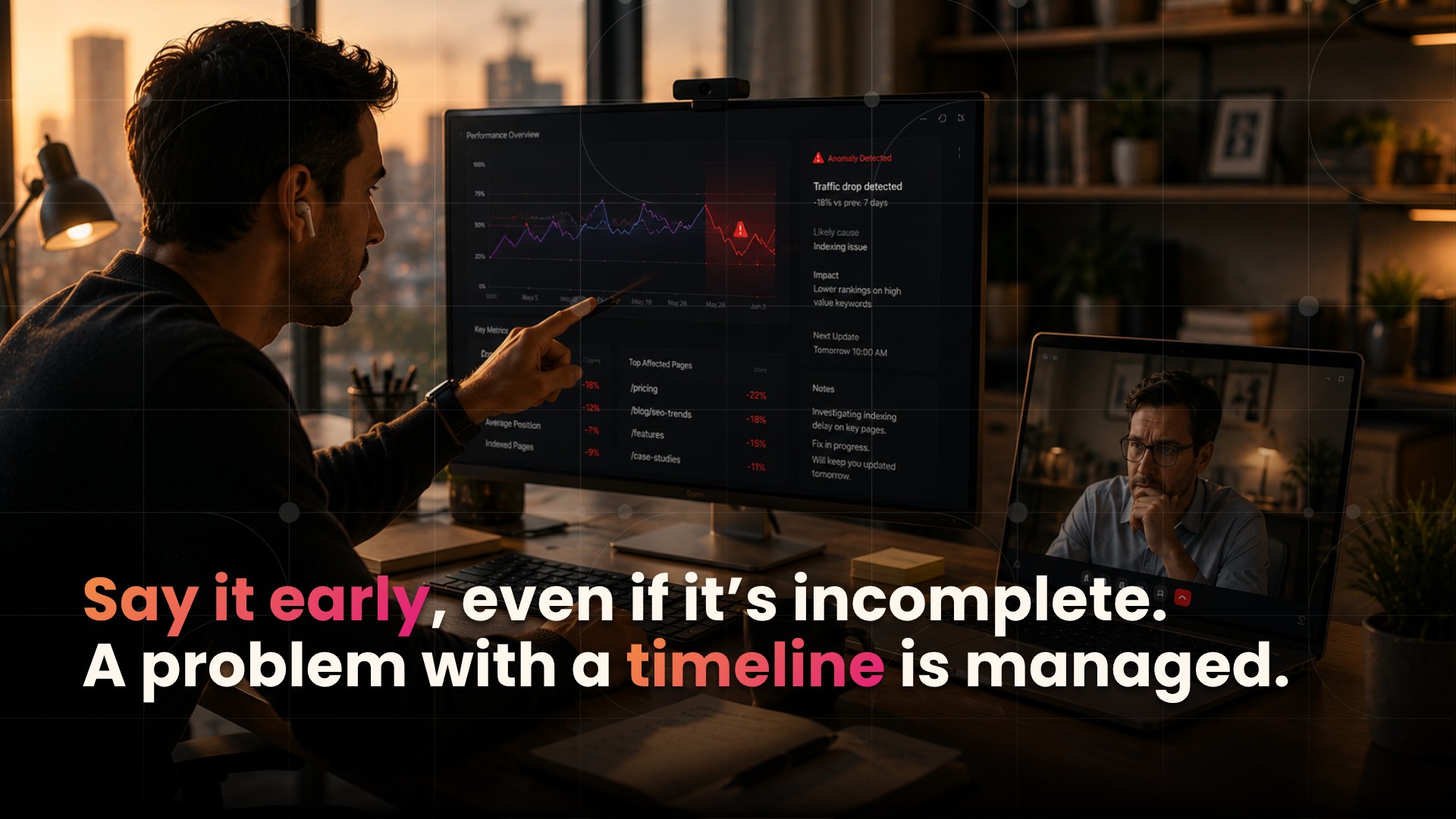
So I built a rule, and it's boring on purpose: the day I know, they know, same day. The message has four parts and never skips the last one: what happened, what I know so far, what I'm already doing about it, and when I'll come back with more. That last part does more work than the other three combined. A problem with a next-update time attached reads as managed. The same problem with no timeline reads like a fire. People don't panic about bad news, they panic about bad news with no edges.
Not everything clears the bar for a same-day call, or you'd be crying wolf by Wednesday. The filter I use is one question: would they feel even a small betrayal to learn I knew this before they did? A writer they value resigning clears it, a formatting bug I'll fix by morning does not. If the honest answer is that hearing it late would sting, it goes out today, unfinished, before I'm comfortable sending it.
I used the rule a few weeks ago. We saw a dip coming on an account before the client did, the kind of thing that lands in their dashboard within a week and in their inbox from their own boss right after. The old me would have waited to understand it fully and arrived with a clean diagnosis. Instead I sent the half-formed version that day. Here's what we're seeing, here's what we don't know yet, here's what we're testing, you'll hear from me by Friday. Nothing about that message was impressive. It just meant that when the dip showed up, the client was already standing next to me looking at it, instead of finding it alone and wondering why I'd said nothing.
The unfinished version is the one that renews their permission to not watch.
Here's the part that surprised me, and it's why I'm not writing this as a confession. The clients who get the early, unfinished version of bad news are not the ones who leave; they're the ones who give us more. Every time a partner watches you flag something the same day you saw it, you hand them proof that the function is visible to you, which is the only thing that makes it safe to keep out of their hands. You're not reporting a problem, you're renewing their permission to not watch. One of the clients I was most nervous about being that blunt with is the one who has grown the account the fastest, and it isn't a coincidence. The hard early calls are what let them relax.
The pull to wait, polish, and arrive with everything solved is strong, and I still feel it every time. I've just learned what it is. It's the instinct of someone protecting their own image, and any client worth keeping can feel image protection from the first sentence. The finished, reassuring version is for you. The fast, ugly, same-day version is the one that's for them.
So if you run anything that someone else is trusting you to run out of their sight, watch the gap between when you know and when you say. That gap is not where you look competent. It's where the trust drains, one withheld thing at a time, until the person decides the safest move is to start watching you again. The whole game is to never hand them a reason to start.
Milan Lab builds and operates editorial, content, and software teams for digital publishers and media companies. See how we work.
Working through this in your own operation?
It's the kind of problem we build teams to solve.
See how we work